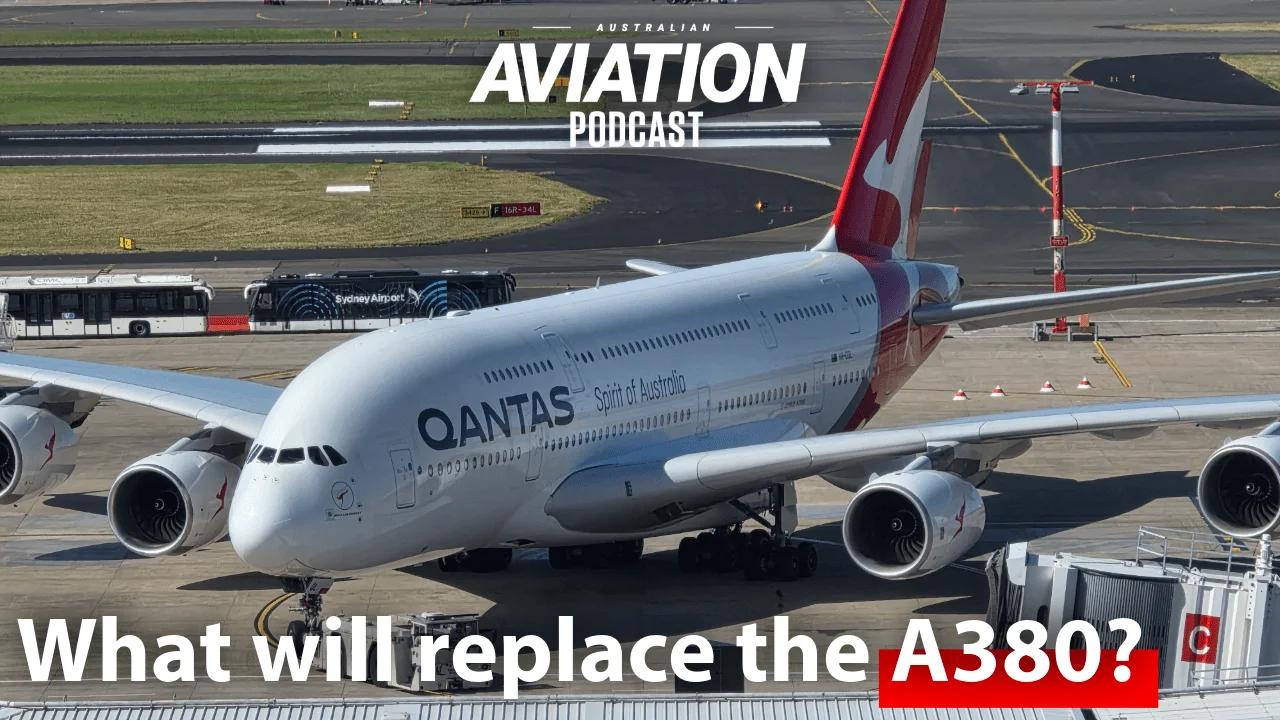
Australian Aviation has put the A380 question back on the table in its latest video podcast, with Jake and David looking at Qantas’ wide-body fleet renewal options and asking what could eventually take over from the airline’s largest aircraft. The episode is framed around a simple but big aviation planning issue: if the A380 is no longer the default answer for the heaviest long-haul flying, what does an airline use instead?
The podcast looks at whether smaller wide-body aircraft could carry enough of the load, and what that means for a carrier such as Qantas as it thinks about future fleet shape. It is a useful topic because the A380 is not just another aircraft type.
It affects gate planning, seat capacity, long-haul scheduling and the way major international hubs handle peak demand. A move toward smaller long-haul aircraft does not automatically mean less flying, but it can change how capacity is spread across routes and times of day.
That is the main aviation angle here: fleet renewal is also airport and network planning. When a very large aircraft is replaced by smaller aircraft, the trade-off can be frequency, timing, airport slots and how many passengers move through terminals at once.
For Australian international aviation, those choices matter because long-haul aircraft are tied closely to airport access and major city connectivity. It is worth a listen for anyone following Qantas, long-haul aircraft decisions or the slow shift away from the superjumbo era.
Related context: Aircraft charter
Comments are closed